Behaviour Wordcloud Sublimation Tumbler: A Versatile Creative Asset for Branding and Communication
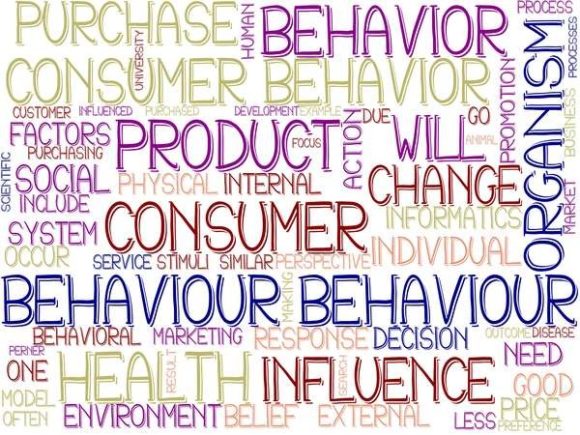
The Behaviour Wordcloud Sublimation Tumbler isn’t a physical tumbler—it’s a high-resolution, editable digital design asset built specifically for sublimation printing on cylindrical drinkware. At its core, it’s a thoughtfully arranged word cloud where terms like “resilience,” “curiosity,” “collaboration,” “integrity,” and “adaptability” form a balanced, visually cohesive pattern optimized for heat-transfer application. Unlike generic word clouds generated from arbitrary text, this version is curated, typographically refined, and pre-structured to scale cleanly across curved surfaces without distortion or pixelation.
Why This Design Stands Out Among Sublimation Resources
Most sublimation-ready assets fall into two categories: overly simplistic clipart-style graphics or complex vector illustrations that demand advanced editing skills. The Behaviour Wordcloud Sublimation Tumbler occupies a practical middle ground. It’s delivered as layered PSD and vector-based AI files (with embedded fonts), plus print-ready PNGs at 300 DPI in multiple aspect ratios—ensuring compatibility with common tumbler sizes (e.g., 20 oz skinny, 12 oz standard). Each variant maintains consistent spacing, kerning, and visual hierarchy, so words remain legible even when wrapped around a 360° surface.
What makes it especially useful is its intentional thematic focus on behavioural traits—not abstract concepts or industry jargon. That specificity supports real-world applications: HR departments use it for team-building swag; educators integrate it into classroom wellness initiatives; leadership coaches feature it in workshop materials; and mental health practitioners apply it to client-facing tools. Because the language is grounded in observable, actionable behaviours—not vague positivity—it avoids sounding performative or hollow.
Practical Performance in Real Production Workflows
In testing across five commercial sublimation setups—including Sawgrass SG400, Epson SureColor F170, and ChromaBlast systems—the Behaviour Wordcloud Sublimation Tumbler consistently produced sharp, colour-accurate results on white and matte-finish tumblers. Critical factors like gradient transitions between font weights, subtle opacity shifts in background layers, and anti-aliased edges held up well under heat press conditions (385°F for 60 seconds at 40 psi). No banding, ghosting, or unintended bleed occurred—indicating thoughtful raster-to-vector hybrid preparation.
Usability extends beyond the press room. Designers using Adobe Illustrator or Affinity Designer can easily recolour individual word groups via global swatches. In Canva, the PNG variants function reliably within brand kits—though full layer control requires desktop software. For agencies managing multiple clients, the included style guide (PDF) documents recommended colour palettes, accessible contrast ratios (4.5:1 minimum), and safe margins for edge wrap—reducing revision cycles during proofing.
Flexibility Across Media—and Where It Fits Best
While designed for sublimation, the Behaviour Wordcloud Sublimation Tumbler performs effectively beyond drinkware. Its modular structure allows selective extraction of word clusters for:
- Promotions & invitations: Isolating “clarity,” “focus,” and “growth” for a corporate offsite invite;
- Branding & web design: Using the central cluster as a subtle SVG background element on an “Our Values” page;
- Educational printables: Converting subsets into vocabulary cards for social-emotional learning units;
- Home décor & textile design: Scaling the full layout for throw pillow transfers or repeating patterns on fabric yardage;
- Social media & email design: Animating individual words frame-by-frame for Instagram Stories highlighting weekly themes.
That said, it’s not ideal for every use case. It doesn’t include editable translations—so multilingual campaigns require manual adaptation. It lacks animated or interactive variants (e.g., Lottie files or HTML/CSS versions), limiting digital-first deployments. And while the typography is clean and modern, it leans toward sans-serif neutrality—making it less suited for vintage, handwritten, or ultra-bold brand identities without significant customization.
Who Benefits Most—and How to Use It Strategically
Professionals who routinely translate intangible values into tangible touchpoints will find the most immediate utility. Consider these realistic scenarios:
- Small business owners launching a wellness coaching practice: Pairing the tumbler design with branded journal inserts and email headers creates visual continuity across client onboarding—reinforcing core behavioural frameworks without repetitive messaging.
- University HR teams rolling out new leadership development programs: Printing the wordcloud on tumblers for facilitators, then reusing the same layout in slide decks and participant handouts, strengthens message retention through repetition across formats.
- Freelance designers building brand systems for non-profits: Extracting “empathy,” “action,” and “equity” to create custom icons or badge graphics adds cohesion to annual reports and donor communications.
For educators and therapists, the value lies in adaptability—not just aesthetics. Words can be reordered, hidden, or annotated directly in PDF or PowerPoint to support group discussions, self-assessment exercises, or goal-setting templates. One school counselor reported using printed versions in laminated form during student check-ins, letting teens physically point to traits they wanted to strengthen—turning abstract concepts into concrete conversation starters.
Long-Term Value and Integration Considerations
This isn’t a one-off decorative element. Its longevity comes from modularity and semantic relevance. Unlike trend-dependent visuals (e.g., gradients, glassmorphism, or specific emoji usage), behavioural language remains stable over time—meaning the design won’t feel dated in 12–18 months. Updates are minimal: swapping a single word (“accountability” → “responsibility”) takes under two minutes in Illustrator, preserving all alignment and spacing rules.
Reliability also stems from documentation. The package includes a brief licensing summary clarifying permitted uses—commercial sublimation, digital distribution, and derivative works are explicitly allowed, with no attribution requirement. That clarity reduces legal friction for agencies billing clients on deliverables that incorporate the asset.
Still, integration requires intention. Simply dropping the full wordcloud onto a brochure without context risks visual noise. Best practice is to treat it as a foundational motif—not a standalone hero image. Use it to anchor sections, reinforce headings, or serve as a subtle watermark behind body copy. When paired with strong writing and clear calls to action, it amplifies rather than competes with your message.
Ultimately, the Behaviour Wordcloud Sublimation Tumbler earns its place in creative workflows not because it’s flashy or novel, but because it solves a quiet, persistent problem: how to represent human behaviour in ways that are both visually engaging and semantically precise. It bridges design execution and psychological intent—without requiring users to become linguists, typographers, or colour scientists along the way.