Motorsport Wordcloud Skinny Tumbler: A Versatile Design Asset for Creative Professionals and Enthusiasts
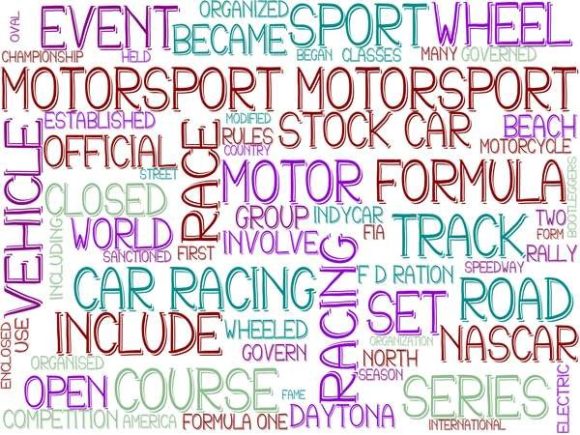
The Motorsport Wordcloud Skinny Tumbler is a specialized digital design resource—a high-resolution, editable word cloud illustration centered on motorsport terminology, aesthetics, and culture, formatted specifically for use with skinny tumbler templates. Unlike generic word clouds or broad automotive graphics, it’s purpose-built with proportional spacing, vertical orientation, and typography optimized for cylindrical print surfaces—particularly narrow-diameter drinkware like 20 oz stainless steel tumblers. Its “skinny” designation reflects both physical fit and stylistic intent: clean lines, tight kerning, and layered visual hierarchy that maintains legibility when wrapped or scaled down.
What Sets the Motorsport Wordcloud Skinny Tumbler Apart
Most word clouds prioritize density or algorithmic frequency mapping—but the Motorsport Wordcloud Skinny Tumbler prioritizes design utility. It features curated terms like “pole position,” “downforce,” “slicks,” “pit stop,” “turbo,” “gearbox,” and “monocoque,” arranged not by raw count but by visual weight, thematic grouping, and spatial rhythm. The layout avoids overcrowding at the top or bottom—critical when wrapping around curved surfaces where distortion can blur small text. Colors are provided in CMYK- and RGB-safe palettes, with transparent backgrounds and vector-compatible layers (where applicable), supporting seamless integration into Adobe Illustrator, Photoshop, Affinity Designer, or Canva workflows.
This isn’t just clipart. It’s a modular component: individual words can be isolated, recolored, repositioned, or replaced without breaking composition integrity. That modularity makes the Motorsport Wordcloud Skinny Tumbler adaptable far beyond its namesake application—though it performs exceptionally well there.
How It Fits Within Broader Design Resource Categories
Designers evaluating resources often weigh options across three overlapping categories: ready-to-use assets, customizable templates, and generative tools. The Motorsport Wordcloud Skinny Tumbler sits firmly in the second group—but with qualities that bridge the others.
- Compared to generic word cloud generators: Tools like WordClouds.com or MonkeyLearn produce statistically driven layouts that rarely consider physical constraints (e.g., curvature, bleed zones, or minimum readable font size). They also lack domain-specific curation—“brake” might appear larger than “aerodynamics,” even though the latter carries greater conceptual weight in high-level motorsport contexts. The Motorsport Wordcloud Skinny Tumbler bypasses that guesswork.
- Compared to full illustration packs: While comprehensive motorsport icon sets offer engines, helmets, and circuit maps, they rarely deliver typographic cohesion across multiple applications. A word cloud built for tumblers inherently supports consistency across merchandise lines—so the same visual language appears on a tumbler, a postcard, and a festival banner without requiring manual alignment or scaling adjustments.
- Compared to custom commissioning: Hiring an illustrator for a bespoke word cloud starts at several hundred dollars and takes days or weeks. The Motorsport Wordcloud Skinny Tumbler delivers professional-grade structure and aesthetic judgment out of the box—ideal when timelines are tight or budgets constrained—but still leaves room for personalization.
Practical Use Cases—and Where It Excels
The Motorsport Wordcloud Skinny Tumbler shines in scenarios where thematic resonance, scalability, and production efficiency intersect. Consider these real-world examples:
- A grassroots racing team launching a fan merchandise line uses the word cloud as the central motif on tumblers, then repurposes the same layout—slightly adjusted—for rally event invitations (scaled down, placed beside a date/time block) and social media banners (cropped to highlight “overtake” and “grid” in bold).
- An automotive magazine designer integrates the word cloud into a special issue cover background—layered subtly behind editorial type—then pulls out “chassis,” “diffuser,” and “telemetry” for pull-quote callouts inside the feature spread.
- A motorsport educator building an online course downloads the file and imports it into Canva, using individual terms as draggable labels in an interactive drag-and-drop quiz about race strategy components.
Its strength lies in repetition with variation: one source asset, many outputs—without visual fatigue or inconsistency.
Tradeoffs and Realistic Limitations
No single resource covers every need. The Motorsport Wordcloud Skinny Tumbler is intentionally focused—not exhaustive. It doesn’t include manufacturer-specific branding (e.g., Ferrari red gradients or McLaren papaya), nor does it contain technical schematics, driver portraits, or animated variants. If your project requires photorealistic tire tread textures or FIA-regulation-compliant logos, this isn’t the primary tool.
It also assumes a baseline level of design familiarity. Users expecting “drag-and-drop-and-print” simplicity may need to adjust layer opacity, fine-tune spacing for specific substrates, or convert text to outlines before sending to a print vendor—especially for foil-stamped or embossed applications. Those unfamiliar with DPI requirements for large-format printing (e.g., posters or vehicle wraps) should verify resolution compatibility before scaling beyond 24 inches in height.
And while the word selection reflects widely recognized motorsport concepts, regional or series-specific terminology—like “DRS zone” (F1) or “push-to-pass” (IndyCar)—is included contextually, not exhaustively. Custom expansion is possible, but adds time and iteration.
When It’s the Right Choice—and When to Look Elsewhere
The Motorsport Wordcloud Skinny Tumbler is especially well-suited for projects where:
- You’re producing coordinated collateral across multiple formats (e.g., tumblers + flyers + email headers) and want typographic continuity;
- Your audience has intermediate-to-advanced familiarity with motorsport—so terms like “yaw,” “camber,” or “kerb” land meaningfully without explanation;
- You need fast turnaround for time-sensitive promotions, such as track day registrations or race weekend merch drops;
- Brand guidelines emphasize minimalism, typography-driven identity, or monochrome flexibility (the file typically includes grayscale and duotone variants);
- You’re working within budget constraints but still require professional-grade visual cohesion.
Conversely, consider alternatives if:
- Your goal is photorealistic scene-building—say, a detailed Monaco Grand Prix street view. In that case, layered photo composites or 3D render assets would serve better.
- You’re targeting casual fans or children, where simplified icons (“race car,” “checkered flag,” “helmet”) communicate more effectively than nuanced terminology.
- Your output medium demands extreme adaptability across wildly different aspect ratios—e.g., simultaneously optimizing for Instagram Stories (9:16), YouTube thumbnails (16:9), and business cards (3.5 × 2 in). The skinny tumbler format excels vertically but may require thoughtful cropping elsewhere.
- You need multilingual support. The base file is English-language only; translation requires manual adaptation and typographic rebalancing.
Making an Informed Decision
Evaluating the Motorsport Wordcloud Skinny Tumbler isn’t about finding the “best” word cloud—it’s about matching the right tool to your specific creative workflow, audience expectations, and production realities. Ask yourself: Does this accelerate my process without compromising quality? Does it align with how my audience understands and engages with motorsport culture? Can I extend it meaningfully—or will I hit friction points quickly?
For designers, marketers, educators, and motorsport organizers who value intentionality over randomness—and cohesion over fragmentation—the Motorsport Wordcloud Skinny Tumbler offers a rare balance: specificity without rigidity, polish without prohibitive cost, and versatility without visual compromise. It won’t replace every other resource in your toolkit—but in the right context, it becomes the quiet foundation that holds a whole campaign together.