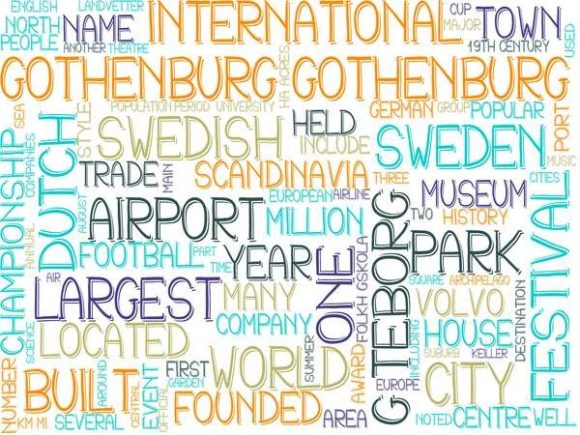
Gothenburg Wordcloud Sublimation: A Versatile Design Asset for Creative Expression and Brand Communication
Gothenburg Wordcloud Sublimation refers not to a physical location or printing method alone, but to a distinctive, context-aware wordcloud design system rooted in the visual language, cultural motifs, and typographic sensibility of Gothenburg — Sweden’s dynamic west-coast city known for its maritime heritage, progressive design ethos, and vibrant creative communities. Unlike generic wordcloud generators that prioritize frequency over form, Gothenburg Wordcloud Sublimation integrates intentional shape architecture, balanced negative space, harmonious color palettes inspired by coastal light and urban textures, and scalable vector fidelity — all optimized for sublimation transfer onto fabrics, ceramics, metals, and coated substrates.
Why Sublimation Makes This Wordcloud Format Uniquely Adaptable
Sublimation printing transforms solid dye into gas under heat and pressure, allowing pigments to bond permanently with polyester-based materials or polymer-coated surfaces. This process demands design assets that are resolution-independent, color-accurate, and structurally resilient — qualities embedded in Gothenburg Wordcloud Sublimation from inception. Because the wordcloud is built as a layered vector composition (not a raster image), it retains crispness whether scaled to 2 cm on a custom lapel pin or stretched across a 3-meter event banner. Its color values adhere to industry-standard CMYK and sRGB profiles, ensuring consistency between digital mockups and final physical output — a critical advantage when producing branded merchandise, promotional textiles, or retail signage.
Real-World Applications Across Diverse Sectors
The flexibility of Gothenburg Wordcloud Sublimation emerges most clearly when observing how different users deploy it within their workflows — not as decoration, but as functional communication infrastructure.
Educators and Researchers
In academic settings, educators use Gothenburg Wordcloud Sublimation to visualize thematic clusters from student essays, survey responses, or qualitative interview transcripts. A history professor might generate a wordcloud reflecting recurring terms in 500 primary-source letters about industrialization in western Sweden — then sublimate it onto cotton tote bags for a museum outreach program. The resulting artifact isn’t just illustrative; it becomes a tactile conversation starter, where typography size signals conceptual weight, and spatial grouping reveals implicit hierarchies in historical discourse.
Crafters and Mixed-Media Artists
Hobbyists integrate Gothenburg Wordcloud Sublimation into layered textile projects: heat-pressing cloud designs onto linen tea towels alongside hand-stitched embroidery, or embedding sublimated wordcloud transfers beneath resin pours on wooden coasters. Its modular construction allows selective masking — for instance, preserving white space around “värdighet” (dignity) while saturating surrounding terms in indigo-dyed cotton. This interplay between digital precision and analog imperfection supports expressive authenticity without sacrificing reproducibility.
Small Business Owners and Local Brands
Independent cafes, boutique studios, and neighborhood festivals in Gothenburg and beyond adopt this format for cohesive, locally resonant branding. A craft brewery might feature a wordcloud highlighting ingredients (“hopp”, “vatten”, “korn”, “tid”), brewing values (“sakta”, “noggrann”, “gemenskap”), and regional references (“Göta älv”, “Hisingen”, “Liseberg”) — all arranged in a wave-like contour echoing the city’s waterways. When sublimated onto aprons, pint glasses, or reusable cups, the design reinforces identity while inviting interpretation. Customers don’t just see branding; they recognize linguistic and geographic familiarity — an emotional anchor often missing in algorithmically generated visuals.
Design Characteristics That Support Intentional Use
What distinguishes Gothenburg Wordcloud Sublimation from off-the-shelf alternatives lies in its embedded design intelligence:
- Contextual Typography: Font weights and widths vary deliberately — not randomly — to reflect semantic gravity. Key terms appear in sturdy, slightly condensed sans-serifs; supporting phrases use lighter, more open letterforms. No decorative flourishes distract from legibility at small sizes or distance.
- Adaptive Shape Grammar: Rather than defaulting to circular or heart-shaped boundaries, layouts respond to substrate constraints. A business card version compresses vertically with justified left alignment; a poster variant expands horizontally with gentle curvature mimicking harbor contours.
- Color Logic Over Aesthetics Alone: Palettes follow perceptual principles — high-contrast pairings for text-on-fabric readability, desaturated mid-tones for background cohesion, and one carefully calibrated accent hue (often derived from Gothenburg’s municipal blue or archipelago sea-green) to guide visual hierarchy.
- Export-Ready Modularity: Each wordcloud ships with layered AI and PDF files, enabling designers to isolate individual words, adjust spacing non-destructively, or swap typefaces without reprocessing the entire composition — essential for multilingual adaptations or accessibility-focused variants.
Implementation Considerations for Creators and Teams
Successful integration of Gothenburg Wordcloud Sublimation depends less on technical complexity and more on aligning intent with execution. Several practical observations emerge from field use:
First, source data quality directly shapes communicative impact. A wordcloud built from unfiltered social media comments may emphasize sentiment-driven slang (“awesome”, “love”, “bad”) rather than meaningful themes. Effective practitioners pre-process input: removing filler words, normalizing plurals and verb forms, grouping synonyms, and assigning weighted categories (e.g., “sustainability” encompassing “recycle”, “eco”, “climate”, “biodegradable”). This curation step transforms statistical noise into narrative clarity.
Second, substrate choice dictates design refinement. Sublimating onto polyester-spandex athletic wear requires tighter kerning and bolder weights to withstand stretching and repeated washing. Conversely, ceramic mugs benefit from subtle gradients and fine-line detail preserved through precise temperature calibration. Understanding material behavior — shrinkage rates, surface energy, thermal tolerance — ensures the wordcloud remains legible and emotionally resonant long after production.
Third, scalability must be verified across touchpoints. A design that reads beautifully on an Instagram story may dissolve into visual mush on a trade-show backdrop unless tested at multiple resolutions and viewing distances. Designers using Gothenburg Wordcloud Sublimation routinely generate three variants per project: micro (≤5 cm width), standard (15–60 cm), and macro (≥1 m) — each adjusted for stroke weight, spacing, and contrast ratio per WCAG 2.1 AA standards.
Beyond Decoration: Wordclouds as Cultural Artifacts
Over time, repeated use of Gothenburg Wordcloud Sublimation across civic initiatives, academic publications, and community events has given rise to an emergent visual dialect — one that subtly signals shared values: transparency, collaboration, environmental awareness, and linguistic inclusivity. When a local library sublimates a wordcloud of borrowed book titles onto reading nook cushions, or when a sustainability NGO embeds stakeholder feedback terms into conference lanyards, the format transcends utility. It becomes a quiet record of collective attention — a snapshot of what a group chooses to name, emphasize, and carry forward.
This cultural layering also supports longitudinal analysis. A municipality tracking annual citizen engagement surveys can generate comparable Gothenburg Wordcloud Sublimation outputs year after year, visually mapping shifts in public concern — from “transport” dominating in 2021 to “housing” and “energy costs” rising in prominence by 2024. Such comparisons remain accessible to non-specialists while retaining analytical rigor, bridging data literacy gaps across age groups and professional backgrounds.
Integration Into Broader Creative Workflows
Gothenburg Wordcloud Sublimation rarely functions in isolation. It commonly anchors larger systems:
- As a foundational element in brand guidelines, defining typographic rhythm and color relationships that extend into logo lockups and icon sets;
- Within UX research synthesis, transforming usability test notes into wall-mounted affinity diagrams during co-design workshops;
- As source material for generative textile patterns, where wordcloud outlines inform CNC-cut stencils or Jacquard loom programming;
- In educational printables, where bilingual versions (Swedish/English or Swedish/Arabic) support inclusive classroom environments;
- And increasingly, as AR-triggered content, where scanning a sublimated poster activates animated explanations of each highlighted term via mobile web experiences.
Its adaptability stems from intentionality — not versatility as an afterthought, but as a core design requirement. Whether appearing on a stainless-steel fridge magnet in a Gothenburg kitchen or embedded in the endpapers of an open-access e-book on Nordic design theory, Gothenburg Wordcloud Sublimation maintains conceptual coherence without sacrificing contextual responsiveness.
Looking Ahead: Sustainability and Evolving Standards
As sublimation technology advances — with newer low-temperature inks, bio-based transfer papers, and closed-loop dye recovery systems — Gothenburg Wordcloud Sublimation evolves alongside it. Recent iterations include optional grayscale-only configurations for reduced ink consumption, embedded metadata for digital provenance tracking, and modular templates compatible with Figma’s auto-layout features for real-time collaborative editing. These updates reflect a broader shift: treating wordclouds not as static endpoints, but as living components within responsible, human-centered design ecosystems.
For creators navigating fragmented tools, shifting audience expectations, and growing demands for authenticity, Gothenburg Wordcloud Sublimation offers something rare — a bridge between data and empathy, scalability and specificity, tradition and innovation — grounded in place, purpose, and practice.