Scoliosis Wordcloud Print: A Practical Design Resource for Health and Creative Projects
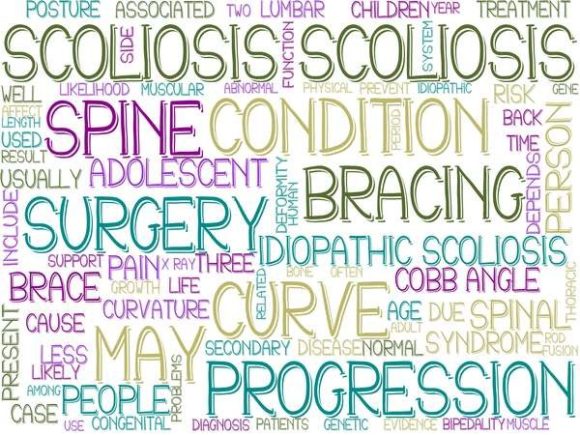
A Scoliosis Wordcloud Print is a visual design element that arranges medically and thematically relevant terms—such as “curvature,” “spine,” “posture,” “bracing,” “physical therapy,” “adolescent,” “X-ray,” “asymmetry,” and “support”—into an aesthetically structured word cloud. Unlike generic word clouds, this version is curated to reflect clinical accuracy, patient-centered language, and educational intent. It is delivered as a high-resolution digital file (typically PNG or vector-based SVG/EPS), optimized for both screen use and professional print applications.
People encounter the Scoliosis Wordcloud Print in contexts where clarity, empathy, and visual cohesion matter—particularly in health education, nonprofit outreach, clinical practice support, and creative advocacy. Its utility stems not from novelty alone, but from how effectively it bridges informational precision with accessible design.
Why Consider a Scoliosis Wordcloud Print?
Individuals and organizations explore this resource for several grounded reasons:
- Educational consistency: Clinics, schools, and support groups use it to reinforce key concepts visually without relying on dense text—especially helpful for adolescents, caregivers, or non-specialist audiences.
- Brand-aligned communication: A custom-tailored word cloud supports cohesive visual identity across materials like brochures, websites, or social media posts—maintaining tone while avoiding stock imagery clichés.
- Time-efficient design scaling: Once licensed or acquired, the file can be reused across formats—from small magnets and business cards to large posters or e-book chapter headers—without redesigning core messaging.
- Thematic anchoring: In mixed-media projects (e.g., textile prints for awareness campaigns or scrapbooking kits for patient communities), it provides a unifying visual motif rooted in subject-matter relevance.
Benefits and Realistic Expectations
The primary benefit of the Scoliosis Wordcloud Print lies in its versatility and intentionality. Because the vocabulary is selected with clinical and experiential accuracy—not just frequency—it avoids oversimplification. Terms like “scoliosis screening” or “Schroth method” may appear alongside “confidence” or “community,” reflecting both medical and psychosocial dimensions.
However, expectations should remain practical. A word cloud does not replace explanatory text, clinical guidelines, or personalized consultation. It functions best as a complementary layer—not a standalone information source. Its impact depends heavily on context: placement, surrounding content, audience familiarity with the topic, and accessibility considerations (e.g., sufficient contrast, legible font weights, and alt-text for digital use).
Also note that most commercially available versions are static designs—not dynamically generated. That means customization (e.g., adjusting term weight, adding local program names, or translating into another language) usually requires graphic design software or vendor support—and may incur additional time or cost.
When It Fits Well
A Scoliosis Wordcloud Print is a strong fit when:
- You’re developing a suite of patient-facing materials (e.g., a clinic’s welcome packet, school nurse handouts, or a nonprofit’s annual awareness toolkit) and need a consistent, respectful visual anchor.
- Your project emphasizes multidisciplinary care—integrating orthopedic, physical therapy, psychological, and peer-support perspectives—and the word cloud reflects that breadth without hierarchy or bias.
- You’re designing for reuse across physical and digital channels and require a single asset that scales cleanly (e.g., from a 2-inch sticker to a 36-inch poster) without pixelation or layout collapse.
- You seek to avoid imagery that risks stigmatizing posture or anatomy—opting instead for abstract, text-based representation that centers language over body visuals.
When Alternatives May Be More Appropriate
There are scenarios where other approaches better serve the goal:
- For diagnostic or procedural explanation: Diagrams, annotated spine illustrations, or step-by-step infographics convey spatial relationships and biomechanics more effectively than word-based layouts.
- When audience literacy or language needs vary widely: Simplified pictograms, multilingual glossaries, or audio-supported resources may improve comprehension more reliably than a word cloud—even one with carefully chosen terms.
- If brand identity relies on photographic authenticity: A well-curated photo library featuring diverse patients, clinicians, and settings may align more closely with organizational voice than typographic abstraction.
- For highly technical audiences (e.g., orthopedic residents or researchers): Structured tables, citation-linked summaries, or data visualizations often communicate nuance and evidence more directly.
Making an Informed Choice
To determine whether a Scoliosis Wordcloud Print aligns with your needs, ask these questions:
- What is the primary action you want the audience to take? If it’s scheduling a screening or joining a support group, pairing the word cloud with clear calls-to-action and contact details matters more than the cloud itself.
- Who owns the design process? If you lack in-house design capacity, verify whether the file includes editable layers or documentation for common tools (e.g., Adobe Illustrator, Canva). Some versions are flattened and non-modifiable.
- How will accessibility be addressed? Check whether the provider supplies contrast ratios, font size guidance, or suggestions for pairing with screen-reader-friendly HTML or PDF structure.
- What licensing applies? Commercial use, redistribution, and modification rights vary. Review terms carefully—especially if planning integration into branded merchandise, apps, or subscription-based digital products.
Finally, consider testing. Print a draft version at intended sizes and review it with a small group representing your target audience. Note which terms stand out, which are overlooked, and whether the overall impression matches your intended message—clinical, supportive, empowering, or educational.
Conclusion
The Scoliosis Wordcloud Print is neither a universal solution nor a niche novelty. It is a purpose-built design tool—one that earns its place when used deliberately, ethically, and in service of clear communication goals. Its value emerges not in isolation, but in thoughtful integration: supporting accurate information delivery, reinforcing inclusive messaging, and enabling efficient, repeatable design work across diverse formats. As with any resource in health communication, its effectiveness depends less on its visual appeal and more on how well it serves the people who engage with it.