Attendant Wordcloud Sublimation: A Flexible Design Resource for Diverse Creative Applications
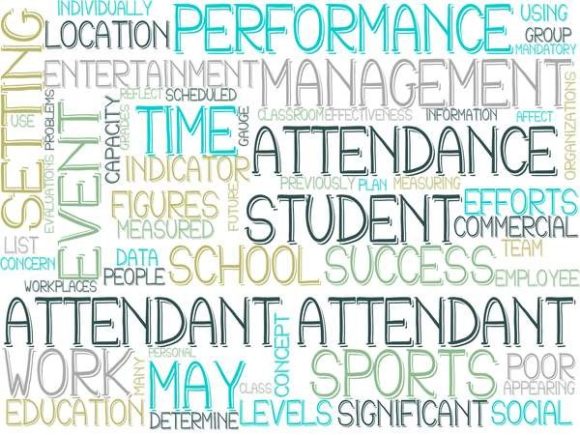
Attendant Wordcloud Sublimation refers to a curated, high-resolution digital word cloud asset designed specifically for sublimation printing and broader design integration. Unlike generic word clouds generated by online tools, Attendant Wordcloud Sublimation is pre-optimized—balanced in typography, spacing, contrast, and color transparency—to transfer cleanly onto polyester-rich substrates (e.g., mugs, apparel, tumblers) and adapt seamlessly across print and digital formats. Its distinction lies not in novelty alone, but in intentional versatility: it’s built for function, not just aesthetics.
How It Differs From Standard Word Cloud Generators and Stock Assets
Most word cloud tools—whether free web apps or desktop plugins—produce outputs that prioritize algorithmic frequency mapping over design readiness. They often lack consistent kerning, scalable vector fidelity, or CMYK-safe color profiles needed for professional output. In contrast, Attendant Wordcloud Sublimation arrives as a layered, editable source file (typically PSD or AI-compatible) with embedded color separation guidance, bleed-safe margins, and transparent backgrounds. This reduces prep time significantly when moving from concept to production.
Compared to general-purpose stock word clouds, Attendant Wordcloud Sublimation avoids overused templates and clichéd layouts. It favors organic flow over rigid symmetry, allowing words to cluster meaningfully while preserving legibility at multiple sizes—from 2-inch magnets to 48-inch banners. That balance supports both visual impact and functional readability, a key differentiator when designing for real-world use cases like event signage or branded merchandise.
Where It Excels: Practical Use Cases and Realistic Fit
Attendant Wordcloud Sublimation shines where thematic cohesion and brand-aligned messaging intersect with physical or digital distribution. For example:
- Promotions and invitations: A wedding planner uses the word cloud to highlight names, dates, and shared values on foil-accented invitation suites—without needing custom illustration.
- Branded merchandise: A boutique coffee roaster applies it to sublimated coasters and aprons, leveraging its grayscale-ready base layer to match their earth-toned palette.
- Digital-first campaigns: A nonprofit overlays the word cloud onto Instagram carousel slides and email headers, maintaining consistency across touchpoints without reformatting.
- Print collateral: An education nonprofit integrates it into workshop programs and resource guides, where subtle texture and hierarchy support engagement without overwhelming text-heavy content.
Its strength isn’t in replacing custom typography or bespoke illustration—but in filling a pragmatic gap between off-the-shelf graphics and fully commissioned design. When timelines are tight, budgets modest, or thematic resonance matters more than absolute uniqueness, Attendant Wordcloud Sublimation offers a reliable middle ground.
Tradeoffs and Situational Limitations
No single resource serves every need equally—and Attendant Wordcloud Sublimation is no exception. Its flexibility comes with boundaries worth acknowledging upfront.
First, it assumes a degree of design literacy. While ready-to-print files are included, users benefit from basic familiarity with layers, blending modes, and color mode conversion (RGB for screen, CMYK or simulated sublimation profiles for print). Those relying solely on drag-and-drop platforms like Canva may find initial adaptation slower than using native templates—though many have successfully adapted it via PNG exports with transparent backgrounds.
Second, customization depth has limits. You can adjust color, scale individual word groups, or recolor elements non-destructively—but you cannot easily swap in entirely new fonts or radically alter layout architecture without vector editing experience. If your project demands strict typographic control or narrative sequencing (e.g., words arranged chronologically), a custom-drawn solution may be more appropriate.
Third, material compatibility isn’t universal. Sublimation works best on white or light-colored, polyester-coated surfaces. On dark garments, natural fiber blends, or rigid substrates like wood or ceramic (without poly coating), results vary. Attendant Wordcloud Sublimation doesn’t solve substrate limitations—it optimizes for the environments where sublimation already performs well.
Comparing Approaches: When to Choose It—and When to Look Elsewhere
Choosing Attendant Wordcloud Sublimation depends less on “what it is” and more on “what you’re trying to achieve.” Consider these decision factors:
- Project scope: For one-off or small-batch runs (under 50 units), it often delivers faster turnaround and lower cost than commissioning original artwork. For enterprise-level branding systems requiring strict style guide adherence, however, custom development remains the standard.
- Design control vs. efficiency: If your team includes designers comfortable with layered files, the time saved in layout and color refinement makes it worthwhile. If your workflow relies on marketing staff with minimal design training, simpler drag-and-drop assets or template-based tools may reduce friction—even if they sacrifice some nuance.
- Output diversity: Because it scales across media—from textile prints to ebook chapter dividers—it suits teams managing multiple channels with limited creative bandwidth. A single-use graphic tool optimized only for social posts wouldn’t offer the same cross-format utility.
- Thematic alignment: Attendant Wordcloud Sublimation works best when the message benefits from associative, non-linear presentation—values, themes, emotions, or community keywords. It’s less effective for instructional steps, legal disclaimers, or data-driven comparisons where hierarchy and precision outweigh atmosphere.
In practice, many professionals use it alongside other resources: pairing it with custom headlines for posters, embedding it within larger layouts for brochures, or extracting individual words for social media stickers. Its value increases when treated as a modular component—not a finished product.
Integration Tips Across Common Formats
Success with Attendant Wordcloud Sublimation hinges on thoughtful integration—not just placement. Here’s how experienced users adapt it effectively:
- For sublimation: Always verify your printer’s recommended color profile and test on a sample substrate first. The asset includes grayscale-safe layers, but slight gamma shifts can occur depending on press temperature and dwell time.
- For web and UX design: Export SVG versions where possible for crisp scaling. Use CSS opacity or blend modes to layer it behind hero text—avoiding visual competition while reinforcing theme.
- For printables and scrapbooking: Print at 300 DPI on matte or textured paper to enhance tactile appeal. Its balanced negative space allows hand-lettering or stamping to complement—not compete—with the cloud.
- For branding systems: Pull dominant hues from the word cloud to inform secondary palette choices in logos or business cards—creating cohesion without direct replication.
It’s also worth noting that while Attendant Wordcloud Sublimation supports broad applications, its effectiveness grows with intentionality. Using it identically across every channel dilutes impact; adapting tone, scale, and context preserves relevance.
Making an Informed Choice
Attendant Wordcloud Sublimation isn’t a replacement for strategic design thinking—it’s a tool that responds well to it. Its usefulness emerges most clearly when evaluated against specific goals: speed without sacrificing coherence, consistency without demanding uniformity, and expressiveness without requiring illustration expertise.
If your work involves frequent thematic communication across varied formats—and you value assets that transition reliably from screen to substrate to page—it merits serious consideration. But if your priority is absolute originality, strict regulatory compliance in labeling, or deep typographic storytelling, then investing in tailored solutions remains the more appropriate path.
Ultimately, the strongest creative workflows don’t rely on single tools, but on knowing which resource fits which moment. Attendant Wordcloud Sublimation earns its place where clarity, adaptability, and cross-medium reliability matter most.