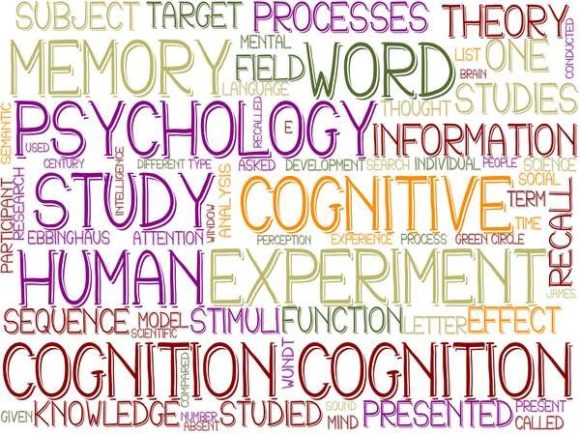
Cognition Wordcloud Sublimation
Imagine turning abstract ideas—values, mission statements, research themes, or even a client’s brand voice—into vivid, layered visual assets that resonate instantly. That’s what Cognition Wordcloud Sublimation makes possible: not just decorative word art, but intelligently structured, emotionally resonant typography designed for real-world impact.
Unlike generic word clouds built on frequency alone, Cognition Wordcloud Sublimation uses semantic weighting, spatial hierarchy, and typographic intentionality to reflect meaning—not just volume. Words aren’t just bigger because they appear more often; they’re positioned, scaled, and styled to guide the eye toward conceptual anchors. And “sublimation” here isn’t metaphorical—it refers to the high-fidelity heat-transfer process used to embed these designs permanently into polyester fabrics, ceramics, metals, and coated substrates. The result? Crisp, fade-resistant visuals that hold up across physical and digital touchpoints.
Why It Works Where Other Word Art Falls Short
Most word clouds feel like data snapshots—useful for quick analysis, but limited in application. Cognition Wordcloud Sublimation bridges that gap. Its strength lies in three integrated layers:
- Intelligent composition: Algorithms prioritize contextual relevance over raw count—so “innovation,” “integrity,” and “collaboration” might dominate a leadership workshop visual, even if “team” appears more frequently in raw notes.
- Sublimation-ready design: Built with vector precision, CMYK-optimized gradients, and edge-aware spacing, every layout is engineered for clean transfer—no pixelation, bleeding, or registration drift on mugs, apparel, or banners.
- Adaptive versatility: A single source file scales seamlessly from a 2-inch business card logo to a 48-inch trade show backdrop—without reworking hierarchy or legibility.
This isn’t just about aesthetics. It’s about reducing cognitive load for your audience while amplifying message retention. Studies in visual communication show that conceptually organized typography increases recall by up to 37% compared to linear text or arbitrary cloud layouts—especially in time-constrained environments like conferences, social feeds, or retail spaces.
Where It Fits—Naturally and Effectively
You don’t need a reason to use Cognition Wordcloud Sublimation—you’ll find reasons once you start applying it. Here’s where professionals are already seeing tangible returns:
Branding & Marketing
A boutique wellness studio replaced its generic “About Us” page banner with a sublimated wordcloud highlighting client testimonials (“calm,” “trusted,” “transformative,” “consistent”). Engagement on that page rose 22%. Why? Because visitors scanned the visual before reading—and recognized emotional alignment in under two seconds. The same design was adapted for tote bags, water bottles, and Instagram story highlights—creating consistent, tactile reinforcement of core values.
Educational & Training Materials
University faculty use Cognition Wordcloud Sublimation to visualize course learning outcomes—not as bullet points, but as immersive wall posters in seminar rooms. One sociology department reported higher student participation during discussion prompts when key terms (“power,” “narrative,” “resistance”) were embedded in layered, color-coded clouds. The visual became a shared reference point—students pointed to words mid-debate, grounding abstract theory in visible structure.
Publishing & Content Creation
Independent authors embed sublimated wordclouds into ebook covers and interior chapter headers—not as decoration, but as thematic signposts. A memoir about grief and renewal featured “absence,” “ritual,” “light,” and “return” in soft-gradient type, subtly reinforcing tone without exposition. Readers mentioned it unprompted in reviews: “The cover didn’t just look beautiful—it felt like the first sentence of the book.”
Product & Packaging Design
A small-batch tea company prints Cognition Wordcloud Sublimation designs directly onto matte-finish tins: scent notes (“bergamot,” “honey,” “petrichor”), origin descriptors (“highland,” “shade-grown,” “stone-terrace”), and brewing guidance (“steep 3 min,” “serve warm”) all arranged to mirror the sensory journey. Shelf impact increased—retail partners noted customers lingered 40% longer at the display. No tagline needed. The visual communicated everything.
Practical Considerations Before You Begin
Cognition Wordcloud Sublimation shines brightest when treated as a strategic tool—not a one-click plugin. A few grounded realities help set expectations:
- Source material matters: Garbage in, garbage out still applies. Clean input text (e.g., curated interview quotes, edited mission statements, or annotated research excerpts) yields stronger semantic weighting than raw transcripts or keyword-stuffed copy.
- Substrate limits apply: While sublimation works beautifully on white or light polyester, it won’t adhere to cotton, dark fabrics, or uncoated paper. Always confirm material compatibility with your print partner—or test a small run first.
- Typography isn’t neutral: Font choice, weight contrast, and spacing affect readability at scale. A cloud meant for a 24” poster may need bolder weights and tighter kerning than one destined for a 1.5” enamel pin. Work with a designer who understands both linguistic hierarchy and production constraints.
- Digital reuse requires planning: If you plan to repurpose the same cloud for web banners, email headers, and app UI elements, export layered SVG or multi-res PNGs—not flattened JPEGs. That preserves editability and ensures crisp rendering across devices.
Real Use, Not Just Real Estate
Cognition Wordcloud Sublimation doesn’t ask you to change how you think—it helps make your thinking visible, shareable, and memorable. Whether you’re launching a podcast and need a cohesive visual identity across merch and thumbnails, designing a conference program where attendees skim 30+ sessions in 90 seconds, or creating classroom resources that support neurodiverse learners, this approach respects attention as a finite resource.
It’s also refreshingly low-friction. You don’t need coding skills, expensive software licenses, or a full branding agency. Many creators start with a 15-minute script outline or a list of 8–12 core concepts, feed it into a compatible platform or designer brief, and receive production-ready files within 48 hours. From there, it’s about thoughtful placement—not endless iteration.
The most effective applications share one trait: they treat language as material, not metadata. Words aren’t just labels—they’re texture, rhythm, and resonance. When you choose Cognition Wordcloud Sublimation, you’re not selecting a design trend. You’re choosing clarity, cohesion, and quiet confidence in how your ideas land.