Northeast Wordcloud Sublimation Tumbler
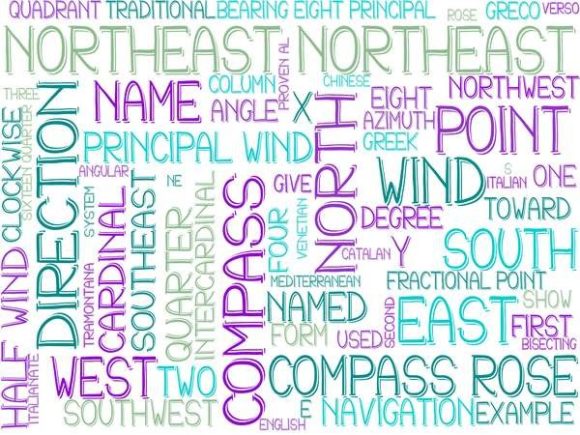
The Northeast Wordcloud Sublimation Tumbler refers to a customizable tumbler design asset—typically a high-resolution digital file—featuring a word cloud layout with thematic or regional vocabulary evoking the culture, geography, landmarks, or identity of the Northeastern United States. It is optimized for sublimation printing, meaning it transfers cleanly and durably onto coated stainless steel tumblers using heat and pressure. Unlike generic clipart or stock illustrations, this design integrates typographic composition, intentional word selection (e.g., “Maine,” “Vermont,” “fall foliage,” “lobster,” “acadia,” “maple,” “coastal,” “granite”), and balanced negative space to support both aesthetic appeal and functional print performance.
People exploring this asset are often evaluating whether it fits into a broader creative or production workflow—not just as a standalone item, but as part of branding, promotional material, or product-based business operations. Its utility extends beyond drinkware: the same word cloud artwork can be adapted across multiple applications including invitations, banners, stickers, cards, flyers, magnets, books, e-books, magazines, posters, package design, programs, business cards, postcards, brochures, scrapbooking elements, printables, logos, branding systems, advertising layouts, media kits, social media graphics, email templates, web design assets, UX interface components, accessories, home décor items, textile patterns, jewelry engravings, and mixed-media projects.
A key reason someone might consider the Northeast Wordcloud Sublimation Tumbler is its dual function as both a ready-to-print resource and a flexible design foundation. For crafters and small-batch producers, it reduces time spent sourcing or designing regionally resonant visuals from scratch. For educators or tourism-related organizations, it offers an accessible way to reinforce local identity without requiring graphic design expertise. For marketing teams building campaign assets across channels, consistency in visual language—especially one rooted in geographic authenticity—can strengthen message cohesion.
One benefit is scalability: because the design is typically delivered in vector or high-DPI raster format, it retains clarity when resized for a 2-inch magnet or a 48-inch banner. Another advantage lies in sublimation compatibility—unlike screen-printed or vinyl-applied alternatives, sublimated designs become part of the tumbler’s coating, resisting peeling, cracking, or fading under normal use. This makes it suitable for products intended for repeated handling or gifting.
However, tradeoffs exist. Sublimation requires specific equipment (a heat press capable of consistent temperature and pressure) and substrates (polyester-coated or ceramic-coated tumblers). Users without access to such tools must rely on third-party print services, adding cost and turnaround time. Additionally, color fidelity depends heavily on printer calibration and substrate quality; what appears vibrant on screen may shift subtly during transfer, particularly with complex gradients or fine text strokes within the word cloud.
Expectations should align with technical realities. While the word cloud is designed for legibility and visual balance, individual words are not meant to serve as searchable metadata or functional UI elements—they are compositional features. The design does not include editable layers or font files by default unless explicitly stated by the provider, so customization (e.g., swapping “Rhode Island” for “New Hampshire”) may require intermediate graphic software skills. Also, licensing terms vary: some versions permit commercial use across physical and digital outputs, while others restrict resale of finished printed goods or prohibit use in logo trademarks without modification.
This asset tends to be a strong fit in several situations. First, for makers running Etsy shops or craft fairs who produce Northeast-themed merchandise and want cohesive, regionally grounded visuals across product lines. Second, for nonprofit organizations or visitor bureaus developing welcome kits, event materials, or educational resources tied to local heritage. Third, for designers building brand identities for cafes, breweries, or boutique retailers located in or inspired by the Northeast—where subtle regional cues reinforce authenticity without overt cliché. Fourth, for educators creating classroom decor or student project templates that connect literacy, geography, and visual communication.
Conversely, alternatives may be preferable in other cases. If your goal is highly personalized content—such as a word cloud generated from customer survey responses or event-specific terminology—a custom-built solution using word cloud generators (with export options for sublimation) offers greater relevance and data-driven resonance. If durability under extreme conditions (e.g., outdoor signage exposed to UV or moisture) is critical, rigid substrates like aluminum or corrugated plastic paired with UV-curable ink may outperform sublimated tumblers. And if your audience spans multiple regions—or if geographic neutrality supports broader market appeal—generic typographic motifs or abstract pattern-based designs could offer more flexibility than a Northeast-specific concept.
Practical decision-making starts with clarifying your primary use case. Ask: Is this for direct-to-consumer product creation, internal team resources, client deliverables, or personal projects? Next, assess your production capacity: do you own or have reliable access to sublimation equipment, or will fulfillment depend on vendor partnerships? Then, review licensing details carefully—not just for legality, but for long-term scalability. A license permitting unlimited physical products may still bar use in app interfaces or SaaS platform branding, for example. Finally, consider how the design interacts with adjacent assets. Does it complement existing fonts, color palettes, and imagery—or will it require additional design work to harmonize?
It’s also worth comparing delivery formats. Some providers supply layered PSD files for selective editing, while others offer only flattened PNGs or SVGs. If you plan to adapt the word cloud for textile printing, verify whether the file includes appropriate bleed and resolution for fabric DPI requirements. Likewise, for web or UX use, check whether lightweight web-optimized variants (e.g., SVG or compressed WebP) are included—or whether conversion steps will be needed.
Ultimately, the Northeast Wordcloud Sublimation Tumbler serves best as a thoughtful component within a larger creative system—not a standalone fix. Its value emerges most clearly when aligned with clear objectives around regional storytelling, consistent visual language, and efficient production. Evaluating it alongside your technical setup, distribution goals, and audience expectations helps determine whether it supports your needs—or whether investing time in customization, alternative assets, or hybrid approaches yields better long-term results.