Cockroach Wordcloud Tie Dye
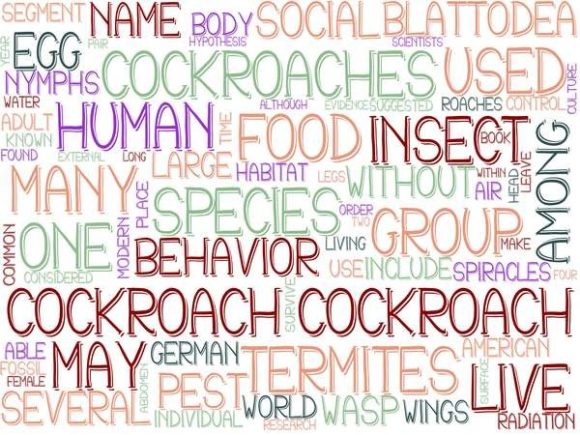
Cockroach Wordcloud Tie Dye is a distinctive visual design asset — not a software tool, plugin, or template pack, but a ready-to-use, high-resolution wordcloud graphic infused with organic tie-dye textures and layered typography. It’s designed for immediate integration into both digital and physical workflows where visual impact, thematic resonance, and brand-aligned expression matter. Unlike generic wordcloud generators, this version comes pre-styled: the words “cockroach” and related terms (e.g., resilience, adaptation, urban ecology, survival) are arranged in fluid, overlapping forms, rendered in soft gradients and watercolor-like dye bleed effects. Its purpose isn’t data visualization — it’s expressive communication.
For professionals and creators, Cockroach Wordcloud Tie Dye functions as a modular creative component. Think of it like a custom brush stroke in Photoshop or a hand-lettered font in Illustrator: it adds texture, tone, and intentionality without requiring design expertise to deploy. It fits most naturally in the middle to late stages of a project — after messaging is defined, audience is understood, and visual direction is set — but can also serve as an early mood board anchor when exploring themes like urban biology, sustainable design, or unconventional storytelling.
Where It Fits in Real Workflows
In practice, Cockroach Wordcloud Tie Dye enters workflows where clarity meets character. A science educator building a unit on insect ecology might drop it into a classroom poster before finalizing lesson slides — using its visual weight to signal thematic continuity across materials. A small-batch apparel brand launching a “Urban Wildlife” collection could embed it subtly into garment tags, packaging inserts, and Instagram story highlights, reinforcing motif consistency without repeating the same logo. A freelance designer working on a sustainability report for a municipal agency might layer it behind a key statistic on page 3, letting the dye texture soften the formality of data while keeping focus on the message.
It works especially well when contrast is intentional: pairing raw, biological subject matter with soft, handmade aesthetics creates cognitive resonance. That duality — gritty concept, gentle execution — makes it useful for projects that aim to disarm, educate, or reframe perception. It’s not for sterile corporate decks or compliance documents, but it excels in contexts where authenticity, curiosity, and visual rhythm support the goal.
Integration Without Friction
Compatibility starts with format. Cockroach Wordcloud Tie Dye is delivered as a transparent-background PNG (300 DPI, scalable up to A3) and vector-based EPS/SVG files. That means it imports cleanly into Canva, Adobe Creative Cloud apps, Figma, Affinity Suite, and even PowerPoint — no rasterization loss, no clipping issues. For print production, the vector ensures crisp edges on business cards, magnets, or fabric labels. For web use, the PNG loads quickly and scales responsively in HTML/CSS layouts when embedded via
Color flexibility matters too. The base version uses muted teal, charcoal, and clay tones — chosen for accessibility (4.5:1 contrast against white/light backgrounds) and versatility across light/dark modes. But because the layers are separated in vector files, designers can recolor individual word groups or adjust saturation to match existing brand palettes. No need to start from scratch: swap one hue, tweak opacity on the dye overlay, and it’s aligned.
Practical Implementation Tips
- Start with placement intent: Decide whether the wordcloud serves as primary focal point (e.g., center of a poster), supporting texture (e.g., subtle watermark behind text), or thematic punctuation (e.g., corner accent on a brochure). This determines size, layering order, and masking needs.
- Test legibility early: Even though it’s decorative, avoid stacking over low-contrast text or busy photos. Use a 10–15% opacity overlay or a light/dark matte behind it if placing over complex imagery.
- Leverage it across touchpoints consistently: Use the same file — not a resized or recompressed version — across your website banner, email header, and printed program. Consistency builds recognition faster than any slogan.
- Pair with complementary assets: It works best alongside clean sans-serif type (e.g., Inter, Poppins), hand-drawn icons, or photography with shallow depth of field. Avoid competing textures — skip grunge borders or noise overlays when it’s present.
Use Cases That Deliver Real Value
For marketers running a campaign around ecological innovation, Cockroach Wordcloud Tie Dye becomes a unifying visual thread: featured on LinkedIn banner images, adapted into animated stickers for Slack channels, and printed on reusable tote bags for event swag. Each application reinforces the same idea — adaptability as strength — without repeating copy.
Bloggers and educators use it to visually segment content. One creator embeds it at the top of every post in their “Unseen Ecosystems” series, signaling topic continuity to returning readers. Another uses it as a section divider in digital workbooks — not as decoration, but as a cognitive cue that shifts the reader into reflective mode before a case study or discussion prompt.
In product development, it supports storytelling at the packaging stage. A biodegradable pest deterrent startup includes a miniature version on the back panel of their box — not as marketing fluff, but as an invitation to consider the organism they’re working with, not against. That small detail changes how customers interpret the brand’s stance before they even read the label.
Long-Term Usability Considerations
Because Cockroach Wordcloud Tie Dye is asset-based rather than platform-dependent, it doesn’t expire, require updates, or lock you into subscriptions. You own the files. That makes it suitable for long-running initiatives — annual reports, multi-year curriculum frameworks, or evolving brand systems. Just store the original vector and PNG in your master assets folder with clear naming (e.g., cockroach-wordcloud-tie-dye_v2_transparent.png) and version notes.
Organization pays off: keep a lightweight style guide snippet noting recommended usage contexts, minimum sizes, and prohibited pairings (e.g., “Do not place over photographic skin tones without matte overlay”). Even a single-line note in your team’s shared Notion or Confluence page prevents inconsistent application down the line.
Quality control is straightforward: zoom to 200% in your design app and check edge integrity. If the SVG renders cleanly at 50px height and 2000px width, it’s production-ready. No need for QA teams or external reviewers — just one visual check before export.
Thinking Beyond the Obvious
Some users initially assume Cockroach Wordcloud Tie Dye is only for entomology or environmental work. In reality, its strongest applications often lie outside literal interpretation. A UX researcher used it as a background element in a workshop slide deck about system resilience — the visual metaphor sparked richer discussion about redundancy and failure tolerance than bullet points ever could. A jewelry designer printed a cropped fragment onto silk ribbon for packaging, turning a biological reference into tactile luxury.
The tie-dye texture does quiet work: it signals imperfection, process, and human involvement. That makes it unexpectedly effective in spaces where trust and approachability matter — like mental health resource guides, community outreach flyers, or nonprofit donor communications. It softens authority without diluting substance.
Ultimately, Cockroach Wordcloud Tie Dye isn’t about adding more to your workflow — it’s about replacing generic filler with intentional, reusable expression. It saves time not by automating tasks, but by eliminating the need to design something from scratch every time you want to signal a specific kind of intelligence: observant, grounded, adaptive, and quietly confident.