Mosquitoes Wordcloud Wallpaper: A Versatile Design Asset for Creative Professionals
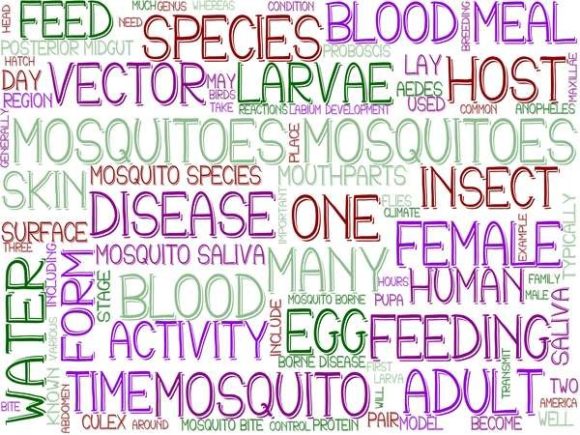
At first glance, Mosquitoes Wordcloud Wallpaper might sound niche—but its utility extends far beyond thematic novelty. This is not a decorative background with random insect-related terms; it’s a thoughtfully composed, high-resolution wordcloud layout designed to function as both visual texture and communicative layer. Built around the term “mosquitoes” and related lexical clusters—such as “vector,” “habitat,” “control,” “disease,” “larvae,” “repellent,” “ecology,” and “research”—it balances scientific accuracy with aesthetic cohesion. The typography is clean, scalable, and carefully weighted to avoid visual noise while preserving legibility at multiple sizes. Its neutral color palette (often offered in grayscale, muted greens, or soft blues) ensures compatibility across branding systems without demanding tonal alignment.
What Sets This Wordcloud Apart From Generic Backgrounds
Unlike algorithmically generated wordclouds that prioritize frequency over hierarchy or context, Mosquitoes Wordcloud Wallpaper reflects editorial intention. Words are grouped thematically—not just repeated—and arranged to guide the eye rather than scatter attention. The density gradient (denser near the center, tapering outward) creates subtle focal points ideal for overlaying text or imagery. It renders well in both print and digital formats: tested at 300 DPI for offset printing and optimized for web-safe RGB output, it maintains clarity from business card size to 48″ posters. Importantly, it’s delivered as a vector-based file (AI/EPS/SVG) *and* high-res raster (PNG/TIFF), giving users flexibility depending on their workflow—no interpolation artifacts, no pixelation when scaled.
Real-World Use Cases Across Industries
For public health communicators, Mosquitoes Wordcloud Wallpaper serves as an immediate visual shorthand. A flyer promoting a community mosquito surveillance program gains credibility when layered over this asset—readers subconsciously register subject-matter authority before reading a single sentence. Educators use it in slide decks or printable worksheets for entomology units; the embedded terminology reinforces vocabulary without requiring glossaries. Environmental NGOs integrate it into report covers or annual review infographics, where its quiet complexity mirrors the multidimensional nature of vector-borne disease work.
Designers working on packaging for eco-friendly repellents or sustainable outdoor gear find it useful as a secondary pattern—subtle enough not to compete with product photography, yet distinctive enough to signal domain expertise. In UX design, it functions effectively as a section divider on landing pages for research platforms or grant-funded initiatives, adding contextual depth without sacrificing accessibility (sufficient contrast ratios are maintained across versions).
Strengths in Practice: Quality, Flexibility, and Integration
Three attributes make Mosquitoes Wordcloud Wallpaper particularly reliable in production environments:
- Consistent typographic rhythm: Font weights, spacing, and kerning were manually adjusted—not auto-generated—so words retain proportionality whether used at 12 pt or 72 pt.
- Non-repetitive composition: No word appears more than twice, avoiding visual fatigue. Synonyms and conceptual variants (“Aedes,” “Anopheles,” “Culex”) coexist without redundancy.
- Cross-platform adaptability: Tested in Adobe Creative Suite, Figma, Canva, and Affinity Designer—no rendering glitches, clipping issues, or font substitution errors reported across major software versions.
This isn’t a one-off graphic—it’s a modular element. You can extract individual words for custom headlines, isolate clusters for iconography, or recolor segments using global swatches. When paired with minimalist sans-serif typefaces (e.g., Inter, Montserrat, or Helvetica Neue), it supports professional tone without feeling clinical.
Who Benefits Most—and When It Might Fall Short
Mosquitoes Wordcloud Wallpaper delivers highest value to professionals whose work intersects science communication, environmental education, healthcare outreach, or academic publishing. Small business owners launching pest management services benefit from its instant topical recognition—especially when used on vehicle wraps or trade show banners where quick comprehension matters more than fine detail. Bloggers covering tropical travel health or climate-linked disease trends use it as a recurring visual motif across post headers and email newsletter footers, reinforcing content identity over time.
That said, it’s not universally appropriate. Brands targeting broad consumer audiences with minimal science literacy may find the terminology too specialized for immediate resonance. Similarly, projects requiring strong emotional appeal—such as fundraising campaigns focused on human impact—may need complementary imagery (e.g., photos of affected communities or field workers) to balance the abstract, lexical nature of the wordcloud. It also assumes basic design literacy: users should understand how to manage layer blending modes, adjust opacity for text legibility, and apply non-destructive masking techniques.
Practical Implementation Tips
Start simple: use the wallpaper at 10–15% opacity behind body copy in a brochure or e-book chapter opener. That softens visual weight while anchoring context. For social media, crop tightly around a thematic cluster—say, “larvae,” “stagnant water,” and “prevention”—and pair it with a short statistic (“70% of breeding sites are preventable”) for Instagram carousels. In package design, apply it as a foil-stamped pattern on matte-finish cardboard—its low-contrast structure translates elegantly to tactile surfaces.
When adapting for branding, treat it as a supporting element—not a logo foundation. One client successfully integrated a cropped “vector + disease + surveillance” triangle into their brand guidelines as a secondary pattern for internal presentation templates, reserving primary logos for standalone use. Another educator used the SVG version to animate individual words appearing sequentially in a lecture video—leveraging the vector paths for smooth motion without quality loss.
Long-Term Value and Workflow Fit
Because Mosquitoes Wordcloud Wallpaper avoids trend-driven aesthetics—no gradients, glass morphism, or AI-art stylization—it ages well. A banner designed in 2023 remains visually coherent alongside new assets created in 2026. Its licensing typically permits unlimited commercial use across physical and digital outputs, including resale items like printed magnets or educational kits—making it cost-effective for creators who produce multiple deliverables per project.
It integrates cleanly into existing design systems. If your brand uses a defined color palette, you can recolor the entire wordcloud in under two minutes using global swatch replacement in Illustrator or Figma’s color styles. No need to rebuild from scratch. And because it’s not tied to seasonal themes or pop-culture references, it doesn’t require annual refresh cycles—just occasional contextual updates (e.g., adding “climate adaptation” or “genetic control” if your organization shifts focus).
Ultimately, Mosquitoes Wordcloud Wallpaper earns its place not as a decorative flourish but as a functional design tool—one that quietly strengthens messaging, supports subject-matter authority, and scales reliably across mediums. Its strength lies in restraint: it doesn’t shout, but it doesn’t fade into background either. For professionals balancing clarity, credibility, and creativity, it’s a rare asset that works as hard as it looks.